Here’s another example of how Twitter and other forms of social media are boosting feminism: After Port magazine declared an all-male golden age of magazine publishing, it wasn’t long before a hashtag emerged to celebrate the work of female editors.
Amy Wallace, editor at large of Los Angeles magazine, launched the effort yesterday, and it wasn’t long before it took off:
The best of the best: @JenaJ34 and Christine Kay (who really needs to join Twitter). #WomenEdsWeLove
The two platforms work a little differently. Dipity is a WYSIWYG (short for “what you see is what you get.”) Users insert links, images, text and video directly into the timeline. This video gives you a quick overview:
TimelineJS, meanwhile, is based on a Google Sheets template that allows users to drop in text, photos, videos, maps and more. Click here for the template and step-by-step instructions.
(Both Dipity and TimelineJS are also popular among educators. Here’s a piece from the Chronicle of Higher Education about TimelineJS. And here’s another about Dipity.)
UPDATE, June 18:Here’s another example of Timeline JS from CT News Junkie. Note how the editors designed a still image with a click button to work with the site’s narrow center column.
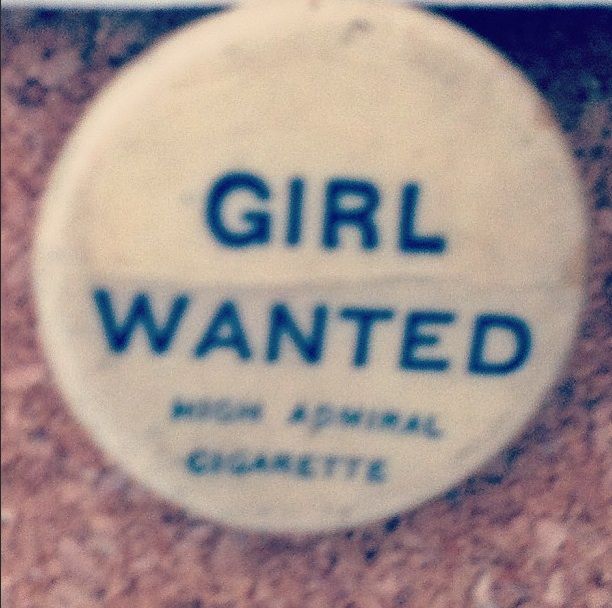
An antique button I recently found at a swap shop. The slogan applies in this case, too. Credit: Meg Heckman
Great news, gang! Magazines are entering a new golden age, one dominated 100 percent by … white men. At least according to Port, a publication that chose to illustrate the resurgence of the glossy by putting a half-dozen top magazine editors on its cover. The problem is, there’s not a woman in the bunch. (And, as book critic Ruth Franklin points out, it’s not like a qualified female editor would have been hard to find.)
Really?
Covers like this are, of course, the product of chance, logistics and quick decisions made on deadline — but the message they send still matters. Being part of a prominent feature brings with it a mantel of credibility — something women have to work harder to earn than their male peers. One recent study found that while women are increasingly likely to win the Pulitzer– perhaps the biggest measure of credibility in American journalism — female winners tend to have more academic credentials than their male peers. In other words, they had to get letters after their names to be taken seriously.
And being taken seriously is more important than ever before, now that journalists must often build their personal brands without the support of major news organizations.
Despite the all-male cover, the online version of Port’s article makes some strong arguments for why magazines may be uniquely poised to make old brands thrive on new digital platforms.
So, cover boys, I wish you all the luck in the world in this new golden age. I just hope there’s room in it for me.
 Meg Heckman