
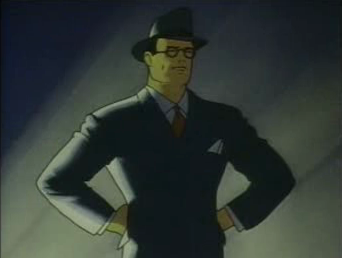
‘Can I be your Clark Kent?’ and other stupid comments made to female journalists

The real Clark Kent would never be such a jerk to his female colleagues. Photo Credit: Wikimedia
The real Clark Kent would never be so rude to his female colleagues. Photo Credit: Wikimedia

I’ve written a lot on this blog about the persistant underrepresentation of women in all kinds of journalism. There are myriad reasons why, but a new Tumblr called “Said to Lady Journos” illustrates one part of the problem: Women who ask tough questions tend to bring out some people’s inner jerk.

A sampling of comments on the Tumblr:

“Can I be your Clark Kent?” — said to female reporter at a Republican victory party.

“Well, what about being a publicist? Have you thought about that?” — male reporter giving career advice to a female intern. (This guy may explain statistics like these.)

Here’s one that’s misogynistic and racist:

“Cute little thing, but shouldn’t you be running a 7-11 or something.” — said to a female reporter of Indian descent.

Thanks to Poynter’s Mallary Jean Tenore for pointing out the Tumblr. Her must-read piece includes a fantastic Storify of reactions from Twitter users.

(For the record, most of the people I’ve dealt with as a reporter have been utterly professional, but there have been exceptions — like the cop who once told me I looked like “a kindergarten teacher with a notebook.”)

Giving the “women’s page” (some) credit

When I still worked for a newspaper, one of my favorite things was digging through the morgue. Each overstuffed filing cabinet held decades of old news, including stories from the paper’s long defunct women’s section.

I often dismissed such stories as misogynistic, old-fashioned fluff — something I’m rethinking after reading this piece in the Columbia Journalism Review. As it turns out, women’s pages have an important — if complicated — place in feminist history.

reserving a separate space for “women’s issues” meant that things like parenting, fashion, and the beginnings of the feminist movement got column inches, the separation also demarcated the women’s page as the site of less newsy content, a “pink ghetto” that still persists.

Women’s sections debuted in American newspapers in the late 1800s, and were often the only place willing to hire female journalists. Although these sections were often devoted to lighter matters like housekeeping, society happenings and fashion, they slowly became an arena for serious topics like birth control and workplace equality.

Most newspapers have turned the women’s pages into style sections, but not, alas,  because the front pages are giving equal space to female voices — even in stories focused on women’s issues.


Part of the society page from the Grand Rapids Herald. The woman pictured, Betty Bloomer, is better known a former first lady Betty Ford. Source: WikiMedia Commons

Women are still in the minority at the NYT

Journalist John Surico attended a talk yesterday by New York Times Executive Editor Jill Abramson. While she spoke, he tapped out a few tweets. One, about the gender breakdown in the newsroom, caught my eye:

(The Times has, however, increased the number of op-ad pieces written by women in recent years.)

Here’s more on the difference between the number of women in the classroom and in the newsroom.