Journalist John Surico attended a talk yesterday by New York Times Executive Editor Jill Abramson. While she spoke, he tapped out a few tweets. One, about the gender breakdown in the newsroom, caught my eye:
Abramson talking about the gender gap at the Times–37% women in newsroom. Yet I'm usually the only dude in my journalism classes.
Duke University is now a training ground for feminist bloggers. Jezebel.com reports that “22 women and 1 dude” will take part in the Write(H)ers program, which is designed to help student writers explore gender issues.
The campus paper, the Duke Chronicle, explains that students “will participate in personal blogging and workshops with professional journalists to discuss gender issues in society and on campus.” One of those journalists is Rebecca Traister, the author of Big Girls Don’t Cry, a book about gender in the 2008 presidential election.
Duke’s Women’s Center is organizing the training and has been linking to student work on its Twitter feed. Here are a few recent posts:
Write(H)ers blogger, Flora Muglia, on cracking the glass ceiling http://t.co/GJeJQeWS
Rosalind Russell plays reporter Hildy Johnson in the 1940 film ‘His Girl Friday.’ Souce: Wikimedia Commons
Hildy Johnson chased down stories for a newspaper. Murphy Brown worked out of a cable station. And, as Poynter’s Mallary Jean Tenore wrote in this piece, today’s fictional, writerly heroines tend to toil away on blogs.
Tenore’s story reminded me of The Image of the Journalist in Popular Culture, a project by USC Annenberg to document fictional journalists through the ages. The backbone of the project is a searchable database full of fun tidbits, but it also makes for an interesting study in how technology and evolving gender standards are changing perceptions of female journalists.
One of the first female characters in the database is a woman who dresses as a man to work as a reporter in a 1874 novel. It wasn’t long, though, before women were working openly as journalists in books, movies and TV shows. As USC journalism professor Joe Saltzman writes, fictional female reporters were more socially acceptable than the real thing during the first half of the 20th Century:
Practically every major actress of the period showed up in tailored coat and pants to fight the males in the newsroom, to assert her individualism and independence… and to become one of the few positive role models working outside the home.
Saltzman goes on to describe the origins of the term “sob sister” — a label given to female reporters because they were often handed tearjerker assignments as opposed to hard news. The sob sister concept, he says, has persevered over the decades:
The 21st-century images aren’t all that different from the images of the sob sisters of the past – if a woman is successful, it means she has assumed many of the characteristics of the newsman, losing her femininity in the process. Or, in most cases, she stays tantalizingly female and uses her womanliness to get to the top. It’s still mostly a no-win situation. For every positive image of a successful female journalist in film, TV, novels and short stories, there are a dozen stereotypical clichés.
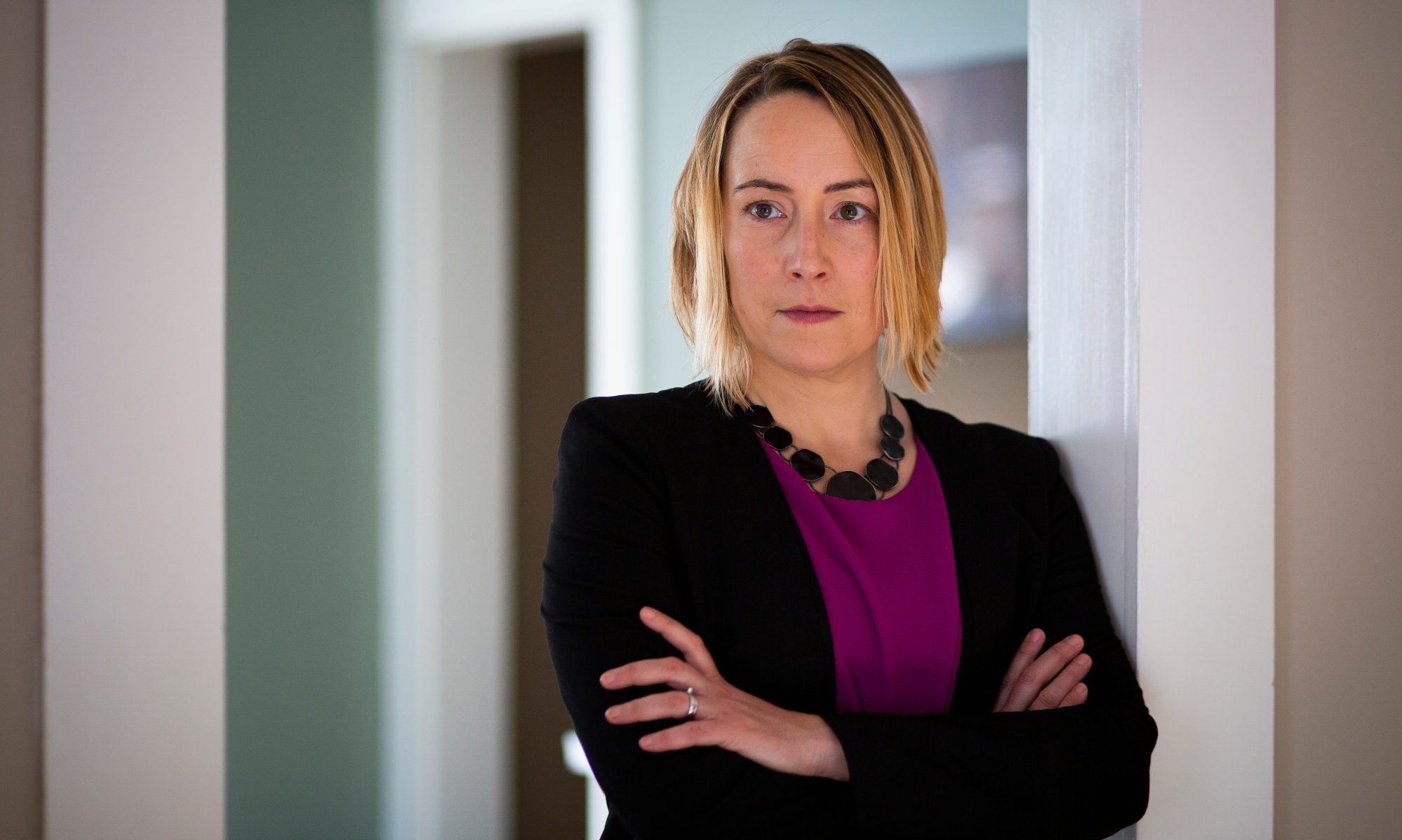

 Meg Heckman