
A first-hand account from the ‘golden hour’

One of the many photos taken by Northeastern University journalism student Taylor Dobbs after the Boston Marathon bombing. Photo/Taylor Dobbs

I was home in New Hampshire on Monday, so when I heard about the Boston Marathon bombing I turned to Twitter to find out what was happening. One of the first things I noticed was a string of tweets from Taylor Dobbs, an undergraduate student I’ve gotten to know through Northeastern University’s journalism program.

Taylor lives fairly close to the marathon course, and he sprinted out the door when he heard the explosions. In the hours that followed, he became a textbook example of how a modern journalist should behave in the hours after a disaster. He got close, but not close enough to jeopardize his safety or block emergency response teams. He shared only what he saw or was able to confirm. No rumors, no speculation. He thrived in what Mark Little calls the “golden hour” — “the time it takes social media to create either an empowering truth or an unstoppable lie.” With photos and 140-character dispatches, Taylor told the truth of the chaos around him.

I wasn’t the only one who noticed his good work. The BBC interviewed him several times Monday afternoon and, by Tuesday, he’d agreed to produce a piece for Medium — a new digital publication led by one of the founders of Blogger. You can see it here. (More photos are available on Taylor’s blog.)

Taylor calls this style of story a “photo/essay” — a term I hope will catch on.  The idea is simple: large photos, a few tight sentences and white space. Think of it as a more elegant, more serious and more structured version of those “15 faces your cat makes” features on BuzzFeed. It’s the perfect use of the web really, one that capitalizes on its visual strengths while remaining clean, tight and readable.

It’s not unusual for major news events to bring new storytelling tools to the forefront.  If they’re used with the same care and professionalism Taylor applied to his photo/essay, I think that’s a good thing for the evolution of journalism.
Building civic engagement online

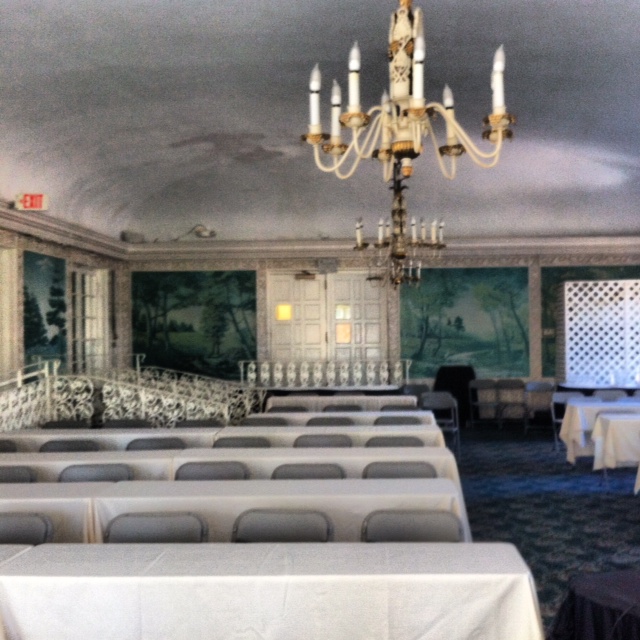
Nicest conference room I've ever used. Photo/Meg Heckman
Nicest conference room I’ve ever used.

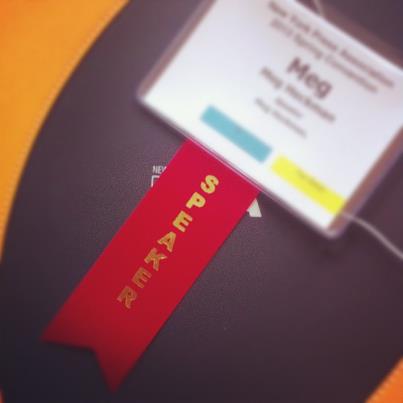
I spent the weekend at a lovely hotel in Saratoga Springs where the New York Press Association held its annual convention. Hundreds of staffers from papers all over the Empire State were there to receive awards, eat great food and listen to speakers like me.

My lecture explored how local newspapers can use digital tools to foster civic engagement. It’s a talk I’ve given before and was happy to repeat because it allows me to challenge something I hear too often from newspaper journalists. The web, they say, is best suited for fluffy features and photos of kittens, not the kind of stories that support democracy.

That’s just not true. This handout includes some examples of meaningful online journalism, as does the presentation below:

The crowd that attended my lecture was full of young, smart journalists starting their careers at New York’s many weekly papers. They asked great questions and shared how they had used digital tools to engage readers in civic life. Like this election night blog from the Riverhead News-Review. Using CoverItLive, the staff mixed strong reporting and a bit of humor with fantastic results.

564515_10151392314772913_662473472_nAnother example of online civic engagement came from the Home Reporter, a Brooklyn paper with a very active Facebook account. The staff told me how they routinely receive news tips and reader questions through the page.

What other ways are local papers using the web to foster civic engagement? Tell me in the comment section below.

Vine for journalism (or time travel)

Last night I got a tour of the Globe Lab, where researchers, journalists and programmers are developing tools for tomorrow’s newsroom. One of the lab’s newest projects aggregates Vine posts from the Boston area and plays them on a giant TV screen. The results were interesting to watch, but I found myself wondering if Vine — which allows users to post six second, looping videos — had any real journalistic use.

The answer is yes, as proved by Concord Monitor reporter Kathleen Ronayne, who spent her morning watching some local kids reenact life in the 1800s:

What do you think of Vine as a tool for journalism?