
Where are the (emoji) women?

Earlier this year, I was pleased when my phone offered me the option of assigning different skin tones to the tiny faces I often include in text messages. Score one, I thought, for diversity in digital culture.

What I missed, though, was another subtle bias in this fast growing communication tool: There are very few emojis depicting professional women. As Mic’s Sophie Kleeman points out:

Women who want to use something other than a neutral female emoji have the following options to choose from: a princess, a bride, twins that resemble Playboy bunnies, a dancer in a red dress and a series of “information desk person” characters… Men get the “serious” professional roles, and women get the “girlie” ones.

As Kleeman goes on to explain, this isn’t the most pressing feminist issue out there – but I still think it’s important. Emojis are becoming a bigger part of our digital lives, and it’s problematic if they don’t allow us to properly express a full range of female experiences. Or at least as full a range as is possible with itty-bitty cartoons.

(Political) origin story

In my latest piece for The Boston Globe​, I revisit a longstanding dispute about the origins of the Republican Party…. and uncover a bit of new information about a key organizational meeting that may (or may not) have taken place in Exeter, New Hampshire more than 150 years ago. Read the whole story here.

Playing with noise

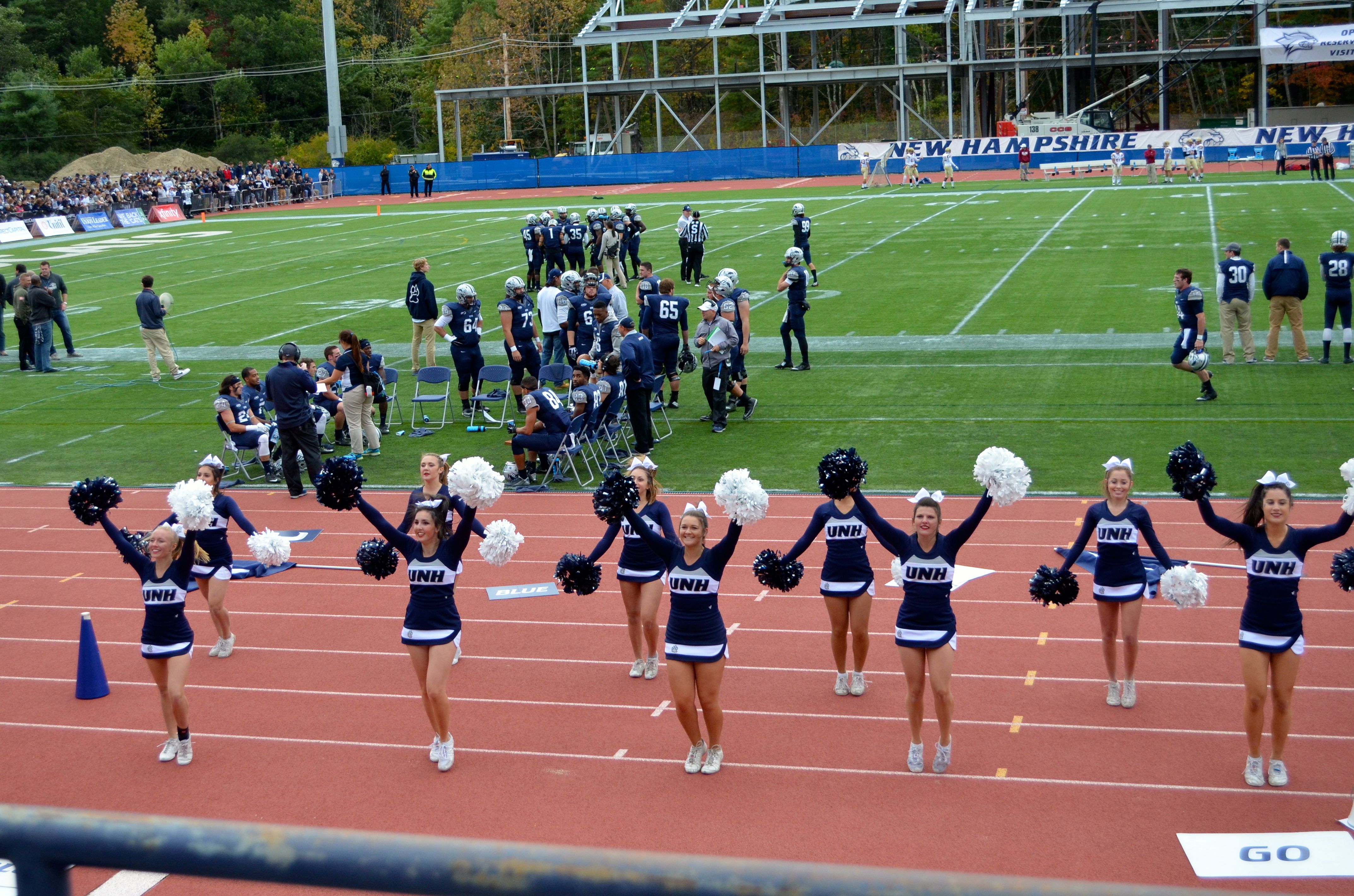
University of New Hampshire cheerleaders perform at the 2015 homecoming game against Elon University. Photo/Meg Heckman

I’m teaching a digital reporting workshop at UNH this fall, and it’s been fun to dust off storytelling tools that I haven’t had occasion to use in any of my recent freelance work. Students in the course are spending the first half of the semester learning the basics of documenting stories with images, sounds and video. (Also on the syllabus: Social media curation, basic data visualizations and a bit of mapping.) Later in the term, they’ll continue to refine those techniques by covering beats in our community.

This week’s focus was on short-form audio storytelling. I assigned the students to create audio postcards from UNH’s homecoming festivities and publish them on SoundCloud. Yesterday, I brought my parents to the football game and, when I saw how close we were to the cheering squad, I decided to create an audio postcard of my own:

I used my iPhone to record the track. (An external mic tossed over the front of the bleachers would have been a good idea. The track isn’t horrible, but you can hear the guy next to me crunching his paper popcorn bag at a few points.) The sound was edited in FinalCut with the video setting turned off. (The students are using Audacity because it’s free.) The photos were taken with my Nikon D5100 and toned/cropped in iPhoto.